This study guide will consist of the major concepts, ideas, and vocabulary that we have discovered during the past 6 weeks. You will find that the relevant activity number is attached to the topics for easy reference.
Major Concepts/Ideas:
· Causes of weather and climate (Act. 53, 57, 58, 66)
· Measuring weather and climate (Act. 51, 68, 69)
· Types of weather and climate (Act. 53, 69)
· Differences between weather and climate (Act. 53)
· Water’s effect on weather and climate (Act. 54, 56, 57, 59, 60, 61, 62)
· Atmospheric effects on weather and climate (Act. 63, 64, 65, 66)
· Properties of water (Act. 58, 59, 60, 62)
· Extreme weather and preparedness (Act. 50, 52, 69)
Important Vocabulary:
· Weather-
· Climate-
· Atmosphere-
· Water cycle-
· Phase-
· Precipitation-
· Weather-related career-
-Mr. Freeman
Tuesday, February 24, 2009

Sunday, February 22, 2009
Day at the Zoo
It has been awhile since my last post, hasn't it? Well, you're in luck, because I went to the zoo today with my fiance and we took close to 300 pictures. It was a perfect day to go, not too hot or cold, and the animals responded by being pretty active. Here is just a sample of what we saw. Can you tell what my favorite class of animal is?


On the way home we saw some pretty amazing cloud formations as well.


I am in the process of making a study guide for the assessment this coming week, and will have it posted tonight or tomorrow. Hope you all had a great weekend!
-Mr. Freeman
Monday, February 9, 2009
Words can be fun
Here are a couple of cool pages about words. The first contains the 100 Funniest Words in English, and the second contains the 100 Most Beautiful Words in English.
Keeping on the topic, here is a hilarious audio clip from a group known as The Vestibules. The skit is called, "Bulbous Bouffant." Either file works, I was using the mp3 file. Draw your own conclusions from it, but I think that some words are just fun to say! Shindig!
Happy Monday!
-Mr. Freeman
Tuesday, February 3, 2009
Cool Simulation Site
Happy Tuesday to everyone!
As discussed in last Friday's class, here is the website for the online, interactive simulations from CU Boulder's Physics Department. The one we used last week was Salts and Solubility, but some personal favorites of mine include Electric Field Hockey, Lunar Lander, and John Travoltage.
I had a student looking at my cool physics calendar (a big thanks to Jamie S. and her mom) yesterday and they asked me what the Large Hadron Collider (LHC) is. Here is the bare bones of it. The LHC is the world's largest particle accelerator, which means that high-energy particle beams are accelerated to within 0.0000009% of the speed of light (299,792,458 meters/second) and smashed into each other. The LHC has large detectors that are designed to look for theoretical physical particles, hopefully shedding light upon the creation of the universe.
More information can be found at the LHC website, but here is a summary of what the LHC is all about. Thanks to The Fischbowl for finding the video.
As discussed in last Friday's class, here is the website for the online, interactive simulations from CU Boulder's Physics Department. The one we used last week was Salts and Solubility, but some personal favorites of mine include Electric Field Hockey, Lunar Lander, and John Travoltage.
I had a student looking at my cool physics calendar (a big thanks to Jamie S. and her mom) yesterday and they asked me what the Large Hadron Collider (LHC) is. Here is the bare bones of it. The LHC is the world's largest particle accelerator, which means that high-energy particle beams are accelerated to within 0.0000009% of the speed of light (299,792,458 meters/second) and smashed into each other. The LHC has large detectors that are designed to look for theoretical physical particles, hopefully shedding light upon the creation of the universe.
More information can be found at the LHC website, but here is a summary of what the LHC is all about. Thanks to The Fischbowl for finding the video.
Tuesday, January 27, 2009
Class Pet Update
Good news! The class pet is on its way! I still can't give you an estimated time of arrival, but I can tell you that it will be sooner rather than later. I'm going to combine our order with the Discovery Science Center's.
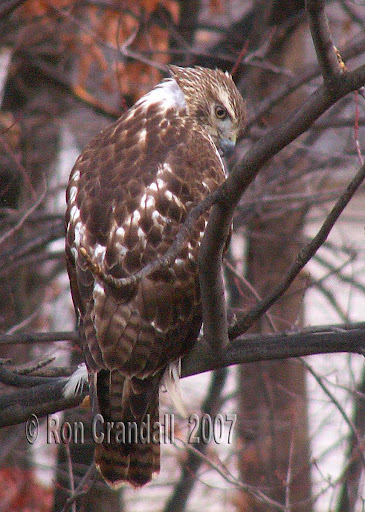
As a side note, car rides are a great way to look for some of our Colorado birds. There is not a trip that goes by that I don't see some kind of neat raptor.
Red-tailed Hawks can be seen near the top of large cottonwood trees and utility posts along the side of open country roads. They can be identified by a dark belly band across a pale chest, a "V" shape that outlines the shoulders of their wings, and of course a red tail.
American Kestrels are usually seen on telephone lines, doing a characteristic tail "flick." These awesome birds have light grey wings and a dark mustache.
If you see a bird or other animal and are not sure of its identity, look for identifying characteristics (color, shape, anything unique) and consult a field guide or ask me. With practice, you'll be able to identify most anything on sight!
-Mr. Freeman
Friday, January 23, 2009
Lab Write-Up Guidelines
As promised, here are the guidelines for the formal lab report due on Monday. Most everyone was at a good point when class ended, so I hope that you don't have much work over the weekend.
Formal Lab Write-Up Guidelines
1. Purpose (1 point): -Why am I doing this experiment?
2. Materials (1 point): -What will I need and how much will I use?
3. Procedure (2 points): -How will my experiment be run?
-Will someone be able to repeat my experiment without asking me any questions?
4. Hypothesis (1 point): -What do I predict will happen?
5. Results (2 points): -What data did I collect?
-Is it easy to follow?
-Did I make a graph or some other visual of my data?
6. Conclusion (3 points): -What do my results show about my experiment?
-Did I revisit my hypothesis? Was I correct or incorrect? Why?
-Did something happen during my procedure that led to different results?
-Would I do anything differently if I were to do this experiment again?Have a great weekend!
Mr. Freeman
Wednesday, January 21, 2009
Planetarium
This is just too cool of a website to wait until we get to the Astronomy unit. The Neave Planetarium lets you look at any modern constellation (there are 88 of them) by entering in your coordinates, date, and time. The coordinates for good ole' Longmont are Latitude: 40° North, Longitude: 105° West.

Screenshot of Orion, one of the most recognizable constellations in our sky.
Another cool feature of the site is moon phases and planet positions for any given date and time. Have fun with it. Get outside and find the same constellations in the sky! Venus is especially bright in the early evening in the Southwestern part of the sky.
-Mr. Freeman
Subscribe to:
Posts (Atom)